‘The Conjuring: Last Rites’ Review—A Fitting Farewell, But Not a Scary One
End of an era
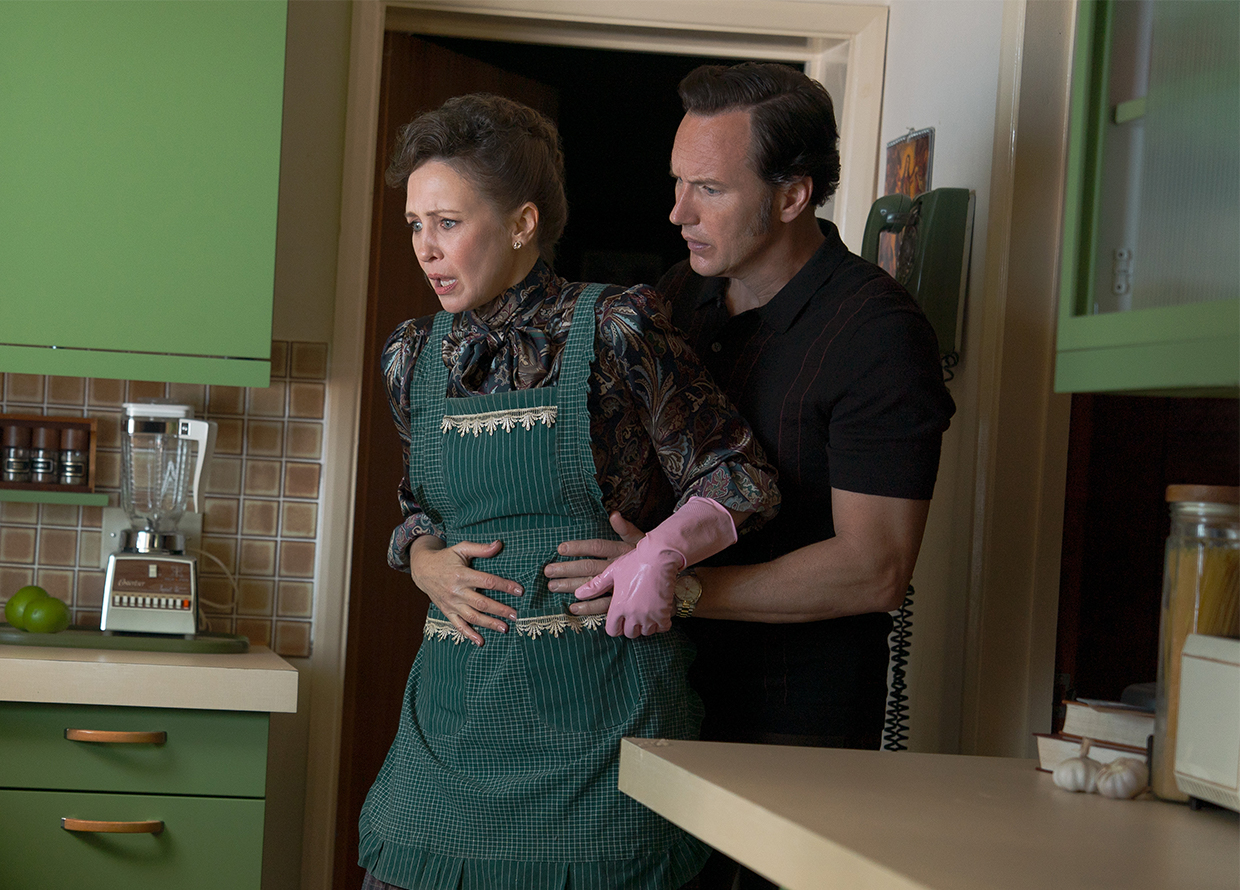

The long-awaited fourth instalment in the main Conjuring franchise is finally here, and with it comes the ending of Ed and Lorraine Warren’s story. The preceding movie, The Conjuring: The Devil Made Me Do It, is a certified trainwreck by Conjuring fan standards. The loss of the original screenwriters and director James Wan from the first two movies was heavily felt, resulting in a lacklustre experience. Director Michael Chaves could not fill Wan’s shoes in the last film, and while Last Rites weighs in much higher, he still falls dreadfully short.
Early marketing has billed The Conjuring: Last Rites as the emotional climax of the franchise, with the tagline “the case that ended it all” setting expectations high for a final, terrifying investigation unlike any other before it. In fact, at a Texas screening of the film, a bishop actually blessed moviegoers with holy water before they entered the cinema. Meanwhile, James Wan, producer of this film, has made clear that with the horror, the movie aims to provide closure to Ed and Lorraine’s story in a personal farewell tied in with supernatural dread.

It is unfortunate that where the movie succeeds at sending off Ed and Lorraine into the sunset, it does so at the expense of its horror; at times, it almost seems like it forgets that it’s a Conjuring movie at all. Michael Chaves has created a better experience than The Devil Made Me Do It for sure, all while wrapping up the Warren’s story, but he ultimately proves that he’s no James Wan.
HORROR FLICK OR FAMILY DRAMA?

Last Rites opens with its strongest material: a 1960s flashback where a young Ed and pregnant Lorraine investigate an antique shop. From the uneasy client interview to Lorraine’s psychic exploration of a backroom filled with ticking clocks, it’s pure Conjuring atmosphere. She discovers a sinister mirror, touches it, and goes into premature labour. The tension spikes in the hospital when the power cuts, and a grotesque figure crawls from the shadows toward her.
It’s classic Conjuring suspense, intimacy, and an ominous force all at once. The sequence is terrifying and hints at the film this could have been. But once the flashback ends, so does the terror, leaving you to wonder if James Wan slipped in to direct this opening before handing it back to Michael Chaves.

Where other Conjuring instalments centre on the hauntings, the real ghost here is the looming sense that the Warrens’ story is nearing its final chapter. After the terrifying opening, horror largely takes a backseat. The first half shifts focus to their daughter, Judy, and her boyfriend, Tony. While Tony seeks Ed’s approval, Judy is plagued by visions that never amount to much except a loose connection to the mirror from the beginning. Meanwhile, Ed’s heart condition from previous films is introduced but never pays off, feeling less like real tension and more like a forced sympathy device.

The haunted house case is normally the core of a Conjuring film, but here it feels oddly sidelined, in the background of the Warrens’ family drama. This one takes place in a Pennsylvania mining town, where the mirror from the opening finds its way into the home of eight, the Smurls. At first, it’s the familiar occurrences: strange noises in the night, unsettling visions, even a possessed doll for good measure.

Soon, though, the tension ramps up; a ceiling light crashes onto the dining table, and an axe-wielding spirit pursues one of the children through the house. It’s a setup with potential, but the case only becomes relevant to the main story in the third act. By then, it’s reduced to another convenient plot device, and what limited horror the film managed to build slips away for good.

The biggest issue isn’t just the focus on the Warrens over the horror, but the film’s failure to blend the two. As it shifts between the Warrens and the Smurls, the tone collapses into chaos, the slow-burn tension that the haunting works to build evaporates, with the Warrens only arriving at the house in the final act.
IF IT LOOKS LIKE THE CONJURING AND SOUNDS LIKE THE CONJURING…
Despite the flip-flopping plot, the movie definitely looks and feels like The Conjuring, for the most part. When the horror works, it works, and Last Rites does channel some of what makes The Conjuring films unique in the horror landscape. One such moment occurs when we watch a character sit alone in a dark living room and study a strange phenomenon in a home video recording. Just as a ghostly face forms on the screen, the shot aligns with what seems like two pale eyes watching her, and us, from the darkness.

What turns out to be the clever reflection of light on two vases drags a cold shiver up your spine in true Conjuring fashion, but what’s unfortunate is that these moments are too few and far between in this movie. The repeated interruptions and changes in tone break the immersion these moments work to create, and the effect wears thin.
Making things worse are the random bursts of ’80s pop anthems: one during the Smurls’ introduction, another over a ping-pong match between Tony and Ed. The music choices jar completely against the horror atmosphere. In another film of any other genre, it might have worked. But this is The Conjuring, it’s almost like it forgets what genre it’s supposed to be.

Something else that has always set The Conjuring apart is its ability to bring terror into the light. Where most horror leans on darkness, like the basement where the bulb won’t turn on or the deserted street at midnight, The Conjuring makes even sunlit kitchens and bright living rooms feel unsafe. James Wan pioneered this, and Chaves carries it on here, with visions, and even Annabelle herself makes a guest appearance, emerging from the shadows.
The sound design is also on point, with silence where it’s needed and intense music during the chase scenes. However, it’s not enough to save the horror in this movie.
SUPERNATURAL? MORE LIKE SUPERFICIAL

My biggest gripe, beyond the overdose of family drama and lack of scares, is just how insultingly shallow the supernatural element is. The mirror, supposedly the centre of both the haunting and the Warrens’ troubles, is introduced with such weight in the opening that you expect it to matter. You want to know what it is, what it wants, why it does what it does. But the film never goes there. It’s just ‘evil,’ full stop. Ed even claims the mirror ‘found them,’ but how it managed that is never explained; it simply drops into the Smurls’ home when the script needs it.

To make it worse, the spirits tormenting the family aren’t even tied to the mirror, reducing the entire supernatural thread to a flimsy plot device. And in a franchise defined by its mythology, Annabelle’s origins, Valak’s backstory, the lore behind every entity, this feels lazy, even disrespectful.

The whole point of following the Warrens, as exorcists, is that they know things about the forces they’re up against, but here the film doesn’t bother. Even Judy’s visions make no contextual sense besides being ‘scary’. The tagline ‘the case that ended it all’ makes little sense when the case hardly matters. The supernatural isn’t a mystery; it’s a prop, and one that exists only because the film needed it so it could be labelled ‘horror’.
FINAL VERDICT

Ultimately, The Conjuring: Last Rites isn’t at all a bad movie. It ties Ed and Lorraine’s story to an end with a neat bow and establishes their legacy. But it’s clear that director Michael Chaves cannot produce a good horror movie to save his life, at least not one deserving of The Conjuring name. With the horror stuck in the backseat and no real effort given to the supernatural element, the movie disappoints in what it promises fans.
Rating: 6/10
For more movie reviews, head here.
| SHARE THE STORY | |
| Explore More |