Elle Fanning and Michelle Pfeiffer on the Alien Reality of Motherhood in ‘Margo’s Got Money Troubles’
Out of this world
Motherhood reveals itself in different forms to different people. Those with means often find it joyous, while those without find it jarring. Margo Millet falls in the latter category. The 19-year-old shows great promise as an aspiring writer. Her ability to string words into written wonders is only surpassed by her idiosyncratic imagination. But she walks right into an age-old cliche: falling for her married literature professor’s sweet nothings.
The affair plays out exactly like everyone in her closed circle expects. Margo ends up pregnant and alone. Following her decision to keep the baby, she is confronted with the harsh reality of being a parent. A major revelation she comes to is that she can’t afford to be one. Her struggles eventually lead her to OnlyFans, an online platform notorious for its pornographic content, where she looks to solve her money problems.
David E. Kelley’s Margo’s Got Money Troubles, adapted from a bestselling novel of the same name, is navigating uncharted waters. Its daring endeavour in taking motherhood to a murky corner of the internet is bound to cause conversations. Intrigued by the premise, we sat down with the stars of the eight-episode series, Elle Fanning and Michelle Pfeiffer, to discuss parenthood, public scrutiny, and crafting their mother-daughter connection.

What appealed to you about David’s take on the story?
Elle Fanning (EF): David is a genius. I think everyone in the television space knows that. His writing is so clear, so heartfelt. He was able to capture Margo’s voice, sense of humour, as well as her heartbreak. It’s hard to describe, but the series has this beautiful tone. It’s not comedy, it’s not drama, but it’s right in the middle. It just feels like real life. As for Margo, I feel like I’ve never gotten to play someone quite like her before, so it was really special.
What was it like working together for the third time?
Michelle Pfeiffer (MP): This is the first time that I think we actually got to know each other in a deeper way. But the entire cast was so talented. Everybody just showed up with their A-game. We really looked forward to seeing each other every day, not only as creatives, but also as people. I mean, we had more fun sitting around waiting for camera setups sometimes than actually working. We are friends now. We see each other all the time.

How did your experience narrating the audiobook inform your understanding of Margo’s journey?
EF: Doing the audiobook was super helpful. I’d never done that before. I felt like I was finding her voice in real time—her cadence, rhythm, and sense of humour. Life throws a lot of difficult things at her, and she has to make a lot of hard choices, but the way she’s able to overcome them and find her power again is something that I admire about her. I felt like I gained a lot of confidence and courage in myself through playing a character who has that strength and spark.
How would you describe the mother-daughter dynamic in the series?
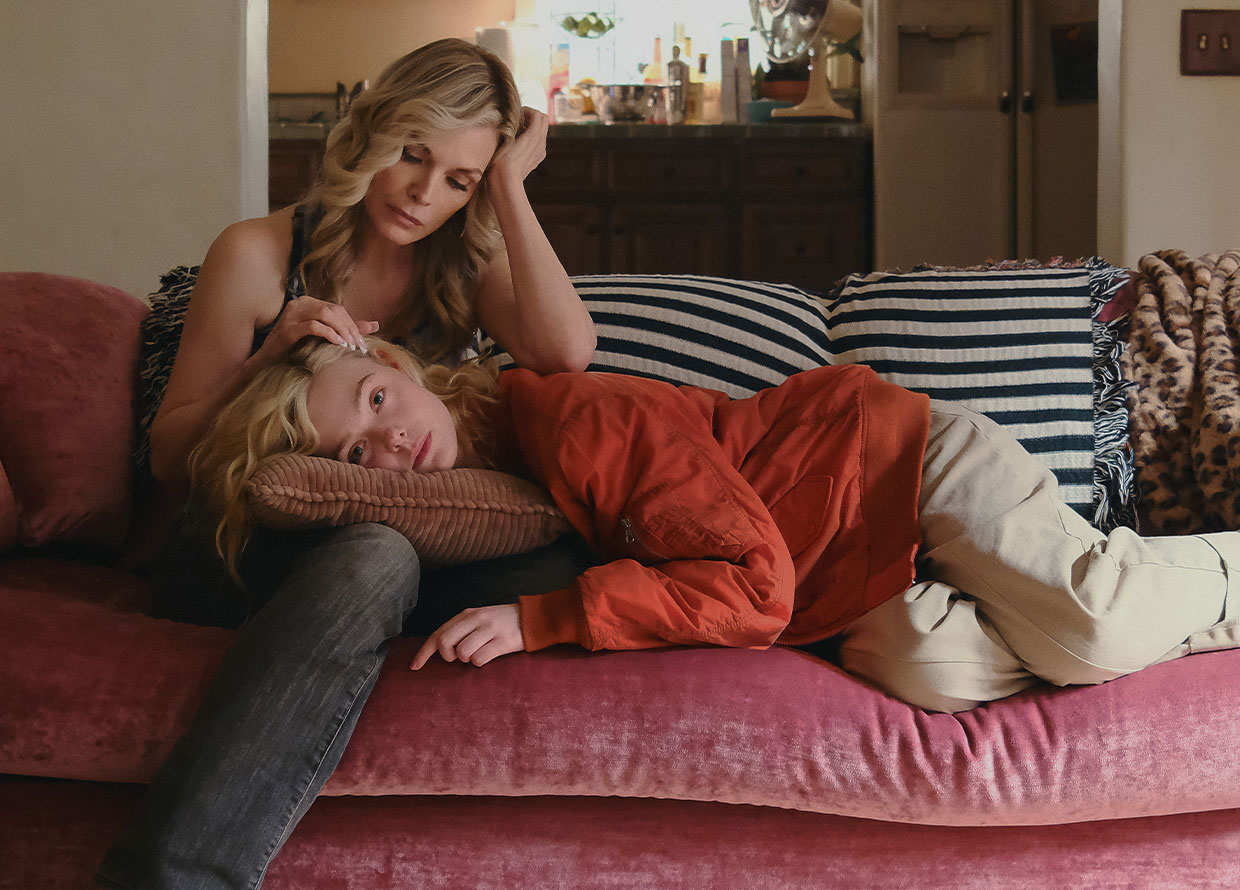
MP: I always find mother-daughter relationships—I have one—interesting. I have to say I love how fierce my character, Shyanne, is. All she wants is a better life for her daughter than what she had. So when she discovers that Margo has decided to keep this child, she starts operating out of fear and panic. She’s afraid that Margo is going to follow in her footsteps. But at the end of the day, it’s just a bunch of flawed, messy people trying to do the best they can with the hand that they’ve been dealt.

How do the fantasy elements reflect Margo’s sense of isolation after becoming a single mother?
EF: I think that the Hungry Ghost character comes from Margo’s experience with motherhood. She feels like an alien to herself. She’s oozing milk out of her breasts, her baby is pooping in her face… all these nasty things. So I do think that Hungry Ghost is an expression of everything that she’s going through. So motherhood completely informs her creativity. I hope that we captured the authenticity of what it’s like to be a new mum.
What moments in the series do you think will be most impactful for viewers?
MP: The line “You ruined my life so pretty” definitely brought me to my knees. There’s also that moment when Shyanne finds out that Margo is doing OnlyFans. No parent really wants to hear that, given the prejudices about the platform, which stems from the lack of understanding of what it really is. That’s not to mention that there’s a whole different playbook when you’re a single mother.

How did your character shape your performance physically and emotionally?
EF: Playing a writer is difficult because writing is such an internal experience. But the show makes it easier with the fantasy elements, especially with Hungry Ghost, showing what’s happening in her imagination. That said, Margo has a strong voice. She has a big personality, and she’s outspoken. I think she gets that from Shyanne. That’s why they butt heads a lot—they’re so similar. That dynamic—who’s the mum, who’s the child—flip-flops.
Can you talk about the balance of light and dark in these imperfect characters?
MP: One of the central themes of the show is the fallacy of judging people from their surface. Just because they dress a certain way or live in a certain neighbourhood doesn’t mean that that’s who they are. Underneath all of that, we’re all grappling with the same issues. You might judge these characters harshly in the beginning when you first meet them, but we don’t let you do that for long.

How does the show connect with your generation’s struggles with loneliness and finding connection?
EF: I think loneliness, to an extent, is the reason why Margo decides to have Bodhi. She’s trying to fill this hole that she has. She believes that having a baby that she can care for will make her not alone. Of course, the love grows over time, but that initial decision to keep the baby comes from a place of loneliness. I don’t know if it relates to a whole generation. It’s just something that Dearbhla Walsh, one of the show’s directors, and I talked about.
Which of your past characters might turn to OnlyFans to support her children?
MP: Susie Diamond from The Fabulous Baker Boys. Oh, but she wasn’t a mother. Are you talking about the ‘mother’ roles exclusively? I can’t remember which ones were mothers. I was a mum in One Fine Day, but I don’t think she would. She’s too uptight. Maybe Sukie Ridgemont from The Witches of Eastwick. She’s pretty open-minded. She’d have a whole witchy act going on, casting spells on people.

Do you think the show challenges how we judge people who use OnlyFans?
EF: Definitely. Going into it, I knew what OnlyFans was, but not to the capacity that I know now. I did a lot of research and found that there’s a spectrum to the platform. The range goes from the very extreme to something as small as stepping in butter or licking doorknobs. For Margo, it’s an outlet for her. The platform gives her the space to find comfort in her body again. It enables her to find that spark of creativity and power in generating a character.
For more culture reads, click here.
| SHARE THE STORY | |
| Explore More |