In Conversation With Dato’ CK and Gary Ng of BEON Diamond
Lab of luxury
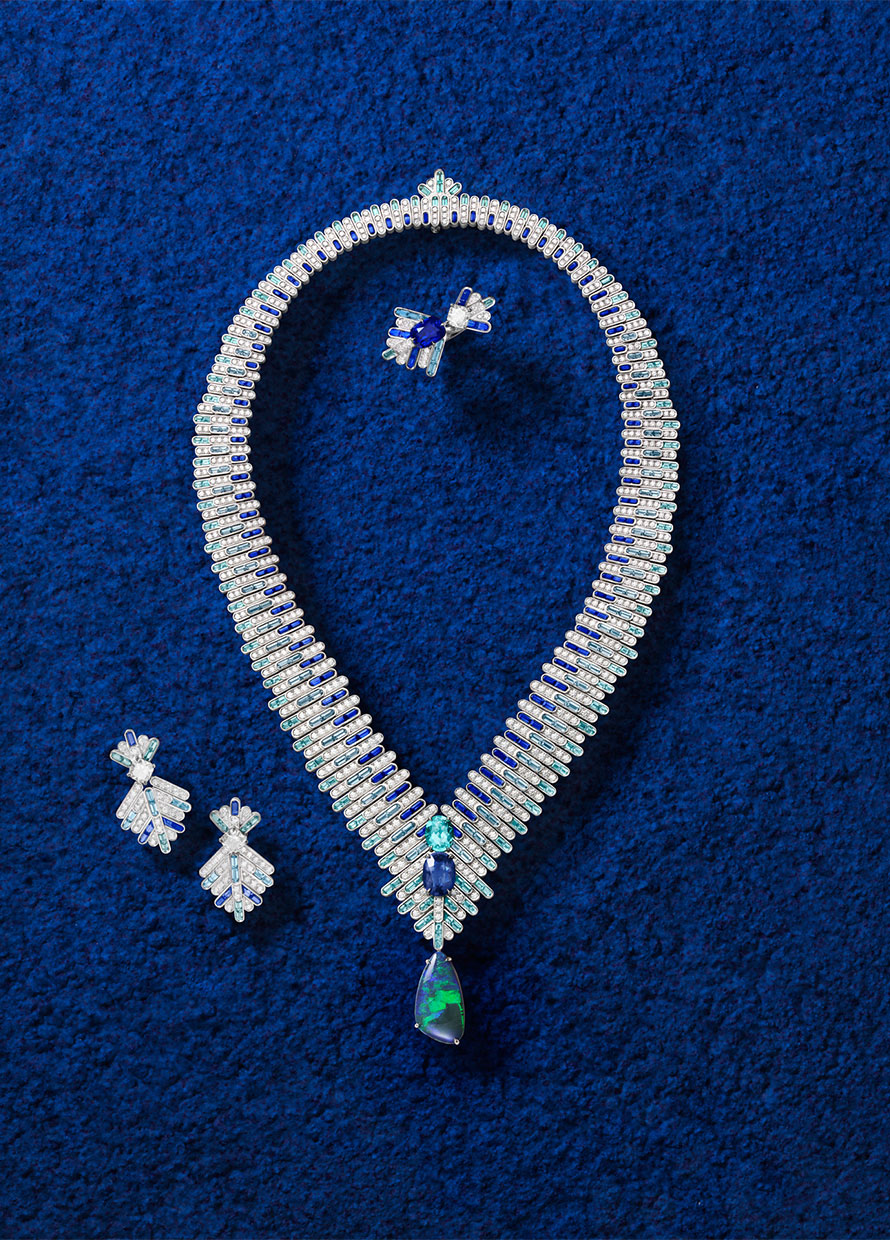
Centuries of jewellery-making have shown us that sparkle and science often go hand in hand. From the ancient lost-wax casting technique to advanced gemstone cutting methods, the history of the craft is strewn with mechanical breakthroughs. The landscape of the industry has once again changed in recent years with the rise of lab-grown diamonds. Rewriting the rules of luxury, they prove that innovation is just as irresistible as tradition.
The lab-grown scene, rapidly gaining momentum abroad, is slowly catching the eye of local enthusiasts. The growing demand for a more sustainable alternative to natural diamonds has allowed homegrown brands to take the leap despite the market being in its infancy. Staying ahead of that curve is BEON Diamond. Established a little over two years ago, the jewellery house has been making strides in making diamonds more accessible to all.
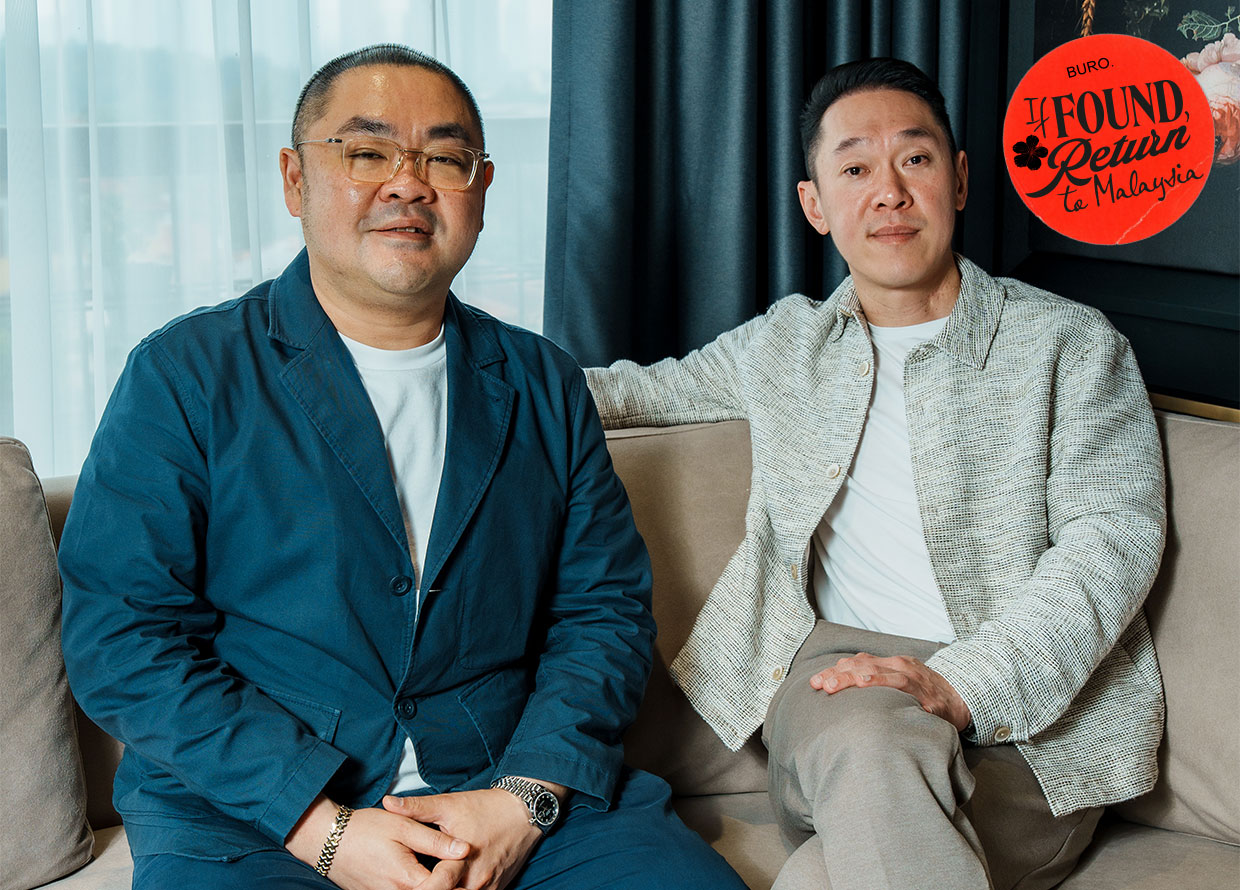
But getting the brand to where it is today is no walk in the park—hype can only get one so far. This is where the expertise of Dato’ CK and Gary Ng comes in handy. Armed with over a decade of experience in diamond trading, the co-founders embark on a mission to make BEON Diamond the largest lab-grown diamond brand in Malaysia. We recently sat with the dynamic duo at their Bangsar showroom for an exclusive interview.

How do you explain natural and lab-grown diamonds to a first-time customer?
Gary Ng (GN): Both types of diamonds are chemically, physically, and optically the same. The only difference is the origin. One comes from the ground, and one is grown in a lab. When we grow a diamond in a lab, we mimic the environment in which diamonds were formed millions of years ago in the Earth’s mantle. Some people also compare it to babies: some are naturally conceived and others via In Vitro Fertilisation (IVF). Technology allows us to create something that is the same.
What is the starting point for a lab-grown diamond?
Dato’ CK (CK): Diamond is a compressed carbon. The compression can happen naturally under the earth or inside a machine. In the lab, we call it a “diamond time machine” because it fast-forwards the process. Natural diamonds take millions of years to form, but a lab-grown diamond takes only about 30 days for one carat. With the latest technology, it can sometimes be done in around two weeks, depending on the specification.

When you grow a diamond, how do you determine when to stop the growth?
CK: It’s pre-programmed. The timing, temperature, and materials have all gone through years of trial and error. After the diamond is grown, the rest of the process—cutting, polishing, and certification—is the same as natural diamonds. One thing worth mentioning is that natural diamonds are expensive largely because about 70 per cent of the cost comes from exploration and mining. You need a lot of equipment and manpower. All that cost is removed when you grow them in the lab. That’s why lab-grown diamonds can be sold at a much more reasonable price.
What are some of the myths about lab-grown diamonds that you’d like to debunk?
GN: Some people think that lab-grown diamonds are not real diamonds; that they are fake. Diamond is diamond. It’s real. It’s not cubic zirconia, moissanite, or any other stone. In terms of DNA, they are the same. That’s why labs like the Gemological Institute of America (GIA) and the International Gemological Institute (IGI) are also certifying lab-grown diamonds. Even though they are created in a controlled environment, they are still flawed. They still have inclusions and different colour grades, just like natural diamonds.

What has been the biggest challenge you’ve faced so far?
CK: The biggest challenge is perception. Many customers still don’t know much about lab-grown diamonds, so we have to help them understand what they are buying, why they are cheaper than natural diamonds, and how the technology works. Market education plays a very big role for us. Lab-grown diamonds are something new in the diamond industry, so it creates a lot of new possibilities, including the chance to come up with innovative diamond shapes as we can afford to experiment now that the cost has been reduced.
How do you build trust in a category that is still relatively new?
CK: By being open and honest. We show customers what we can and cannot do. Designing a very special piece takes time and involves a lot of planning, and even failure, before getting the final product. We have to set the right expectations. Other than that, some of our diamonds are either GIA or IGI-certified. We usually certify diamonds of one carat and above. Smaller diamonds may not be certified unless the client specifically requests it because it involves additional costs like shipping and lab fees.

One of the biggest selling points of natural diamonds is the emotional and historical connection. Do you feel the need to reframe the narrative around lab-grown diamonds?
GN: I think it’s more of an extension of the narrative. Buying a gift is always an emotional thing, right? So it doesn’t matter whether the diamond is mined or lab-grown. It’s the idea and intention of giving something beautiful that counts. Some of our customers who only buy natural diamonds have also jumped on the bandwagon after seeing the endless possibilities lab-grown diamonds can offer them. They allow us to customise everything—even grow and cut a specific size.
What trends or developments do you see influencing the jewellery industry in the future?
GN: Customisation and personalisation. People do not want something that is widely available everywhere. They want something that represents them. At BEON Diamond, we make it a practice to sit with our customers, discuss their ideas, and design the jewellery together. We create a 3D design, print the mould, and then produce the final piece. That journey is very different from simply buying a jewellery piece off the shelf. We do not mass produce our jewellery; every piece at BEON Diamond is unique and one of its kind.

Supply and demand play a huge role here. As lab-grown diamonds become easier to access, prices naturally decline. How does the industry manage that?
CK: The price of lab-grown diamonds, if you compare it to five years back, has indeed dropped significantly. One of the reasons is that the technology has become more advanced. That said, to create a piece, you need gold, design, and workmanship. So even if the diamond price goes down, all these costs won’t ever go away. So the price will stabilise, and that will become the standard. I’m not worried about the price fluctuations in the market. Also, we’re not going after the mass market. Our target is someone who wants personalisation and unique pieces.
But some buyers are concerned about resale value. What would you say to them?
CK: That’s actually a very good question. Many people think natural diamonds hold value, but in reality, they often don’t. For example, ten years ago, if you bought a natural diamond for RM100,000 and tried to resell it—many pawn shops have even stopped accepting natural diamonds because there’s simply no demand for them—you might only get RM35,000. With a lab-grown diamond of the same properties and specifications, you can buy it for RM15,000 and resell it for RM7,500. The loss is much smaller. So it really depends on how you look at value.

What inspires your jewellery designs, and which design best represents BEON Diamond?
GN: We want to do something different. BEON Diamond carries many unusual diamond shapes and designs that you usually won’t find in other jewellery stores. We like the challenge of creating new designs. At the same time, we also want lab-grown diamonds to become everyday jewellery. One of our strongest categories is solitaire pieces, especially larger stones like three-carat or five-carat diamonds.
What metrics matter most to you right now as a founder?
CK: Our focus is on market education and customer satisfaction. Personally, I’m not a money-focused person. I believe that if you do the right thing and follow the right direction, eventually the money will follow. If you chase money first, you might lose the passion behind what you are doing. We foresee that 20 years down the road, natural diamonds won’t make sense anymore. Lab-grown diamonds are the diamonds of the future.
For more articles on jewellery, click here.
| SHARE THE STORY | |
| Explore More |